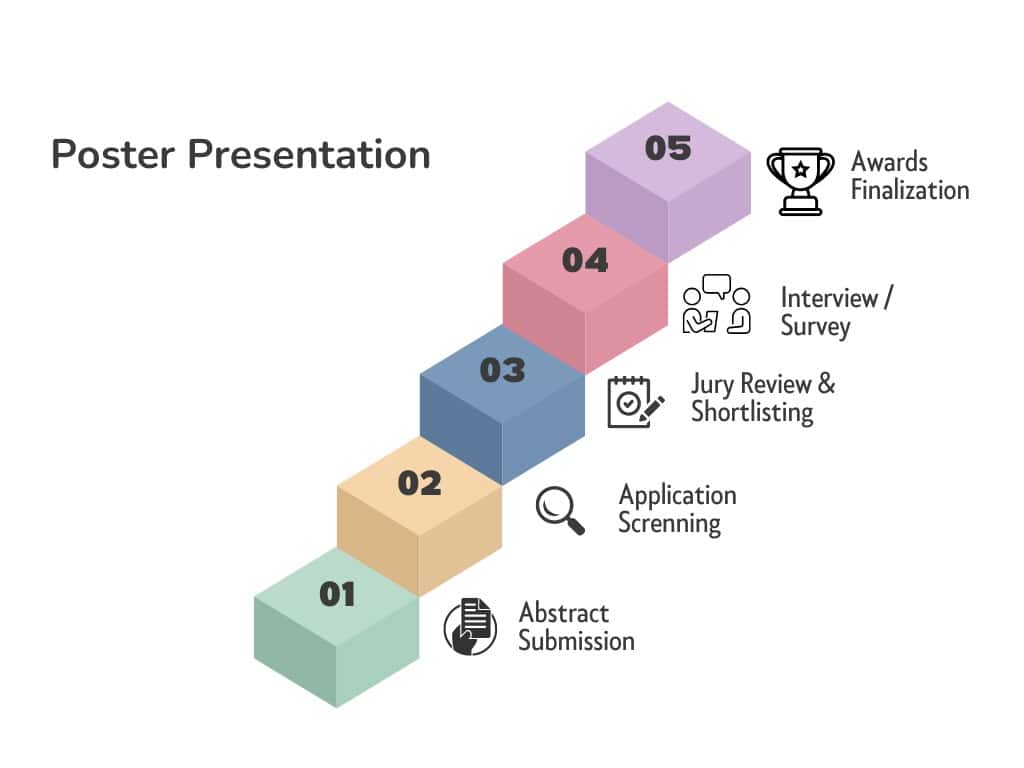
The Poster Presentation Contest at the India Food Safety Conclave 2025 is an initiative designed to bridge the gap between industry and academia. This one of a kind platform is an opportunity for students to showcase their ideas, research and innovative solutions to industry leaders from various food businesses. This initiative encourages students to interact with professionals, policymakers, leaders, and researchers from the food industry and gain real-life experience.
Posters showcasing cutting-edge research, new developments, or useful inventions pertaining to food safety, quality, and public health are welcome from students. In addition to honoring their academic accomplishments, this competition gives students priceless access to mentors, industry leaders, and possible partners.
This poster presentation encourages students from different domains to come together and showcase innovative solutions to real world problems of the food industry. In addition to fostering collaboration, the poster presentation contest is designed to facilitate an interdisciplinary approach to gain cross functional knowledge.
Ultimately, this initiative serves as a critical step in integrating academia with industry, helping to create solutions that are both scientifically sound and practically viable in the food sector.
Soy isolate protein powder, textured vegetable protein (TVP)
Presenter Details – Manoj
Brief about the topic – This study evaluates how different soy protein formats soy isolate, TVP, and HMMA impact satiety and blood sugar response in meal replacement patties. With matched macronutrients and varying protein-to-carb ratios, results show that higher protein levels enhance fullness and stabilize glucose. The patty meets key innovation goals: high-quality plant protein, appetite control, and convenient breakfast format contributing to both metabolic health and sustainable food solutions.
Pisonia alba Assisted Synthesis of Nanosilver for Dye Reduction in Wastewater
Presenter Details – Akshaya Lakshmi S N/Ajeetha
Brief about the topic – This study uses Pisonia alba (Lettuce Tree) to biosynthesize silver nanoparticles via silver nitrate extraction, leveraging its rich phytochemical content. The nanoparticles, characterized by XRD and SEM, were tested for their dye-removal efficiency in wastewater, particularly from textile and livestock industries. The study results highlight an eco-friendly, cost-effective method for treating contaminated water using plant-based nanotechnology.
Bioplastic production from bio wastes (Citrus Peels and Coconut Husk)
Presenter Details – Sudharsan/Keshika
Brief about the topic – This study explores the development of biodegradable bioplastics from citrus fruit waste, combining extracted pectin and cellulose to form flexible, compostable films. Using natural binders and coconut husk fibers, the bioplastics demonstrated strong mechanical and thermal stability, along with enhanced biodegradability in soil. The approach offers a sustainable solution to food packaging waste by converting fruit processing by-products into high-performance, eco-friendly materials.
Development of Flavoured Yogurt with Orange peel shreds
Presenter Details – Emima Christial S/Nadiya N
Brief about the topic – This study explores the incorporation of orange peel shreds (Citrus indica) into flavoured yoghurt to enhance its functional and sensory properties. The peels, known for their antioxidant and antimicrobial benefits, were blanched and treated in sugar syrup before being added at different levels. Samples were evaluated over a storage period under refrigeration for changes in pH, syneresis, and sensory attributes. Results indicated that a moderate level of orange peel incorporation provided the best consumer acceptability with a well-balanced citrus flavour.
Prediction of contamination by ML & AI for restaurant food
Presenter Details – Adhiksha/Thejaswini sj
Brief about the topic – This project presents an AI-powered system that predicts and prevents food safety risks in real time. By analyzing data from kitchen sensors, past inspections, staff records, and customer reviews, it detects early signs of contamination. Using machine learning models, the system enables faster, proactive responses—boosting safety, transparency, and trust in restaurants. Future plans for this project could include blockchain tracking and social media monitoring for smarter outbreak prevention.
Symbiotic Makhana (Fox nuts) infused with the probiotic
Presenter Details – Deepika R/KJ Sreelakshmi.
Brief about the topic – The project develops Symbiotic Makhana (Fox nuts) infused with the probiotic Bacillus plantarum and natural prebiotic flavours to create a gut-friendly, gluten-free snack. Leveraging fox nuts’ porous texture, low GI, and high fibre, the project study evaluates probiotic viability, shelf-life, and consumer appeal, while showcasing a value-added export opportunity for India’s traditional crop. Symbiotic Makhana showed high probiotic viability, good gut survival, and strong synergistic effects,making it a promising functional snack.
Demand Forecasting- Are Innovations in food packaging technology sustainable?
Presenter Details – Bhumika/Dr.Estuti Chandra
Brief about the topic – This study explores the role of innovative food packaging such as edible films, nanotechnology, and biodegradable materials in promoting sustainability. It links smart packaging with UN Sustainable Development Goals (SDG 12, 13, and 3), evaluating consumer trends in products like dairy, confectionery, and organic foods. The research highlights how such technologies reduce carbon footprint, extend shelf life, and support responsible production.
Acryl-off: A food processing aid for dietary acrylamide remediation in starchy foods
Presenter Details – Rahul Chatterjee
Brief about the topic – A protein-engineered E. coli asparaginase was purified and formulated as Acryl-off, a blanching aid that hydrolyzes L-asparagine to reduce acrylamide formation during high-temperature food processing. When applied in snack preparation, Acryl-off significantly lowers acrylamide levels without affecting product quality. The enzyme is stable under refrigeration and has been proven safe through comprehensive toxicity evaluations, offering a reliable and sustainable solution for safer food production.